At the office of SmileArts Dental, we combine modern materials and careful technique to restore teeth so they look natural and perform reliably. Our goal is to deliver restorations that blend seamlessly with your smile while protecting the underlying tooth from further wear or damage.
Teeth are remarkably tough, but they’re not invincible. Cavities, accidental chips, extensive wear from grinding, or large restorations can leave a tooth weakened and more likely to fracture. In many of these situations, a simple filling won’t provide the long-term strength or coverage a tooth needs.
Ceramic crowns—sometimes called all-ceramic or metal-free crowns—offer an elegant solution. Advances in dental ceramics now allow us to create restorations that are both strong and highly lifelike, delivering durability without the visible metal margins that can affect appearance.
Our practice focuses on developing treatment plans that respect both the function and appearance of your smile. We’ll discuss options, walk you through the process, and tailor each restoration to your bite, color, and personal goals.
A crown is a full-coverage restoration that holds a tooth together while restoring its shape and chewing surface. Clinically, dentists recommend crowns when a tooth’s remaining structure is too limited for a filling to work predictably over time. The crown redistributes chewing forces and protects the tooth from future fractures.
Beyond structural support, crowns are used to rebuild teeth after large fillings, to protect teeth that have had root canal treatment, and to finish dental implants. They can also correct cosmetic issues when a tooth is misshapen, discolored, or slightly misaligned but the patient prefers a restoration over orthodontic treatment.
Deciding whether a crown is the right choice involves evaluating the tooth’s remaining enamel, its position in the mouth, and how much stress it must withstand. We take time to examine each case carefully so you understand why a crown might be recommended and what outcome to expect.
To rebuild a tooth with extensive decay or a large fracture
To replace a damaged or failing dental filling
To restore an implant abutment or support a bridge
To give long-term protection to a tooth after root canal treatment
To improve the appearance of a tooth that is dark, misshapen, or undersized

All-ceramic crowns reproduce the way natural enamel interacts with light, creating a translucency and depth that metal-based restorations struggle to match. For teeth near the front of the mouth, this optical quality makes a big difference in achieving an indistinguishable result.
Modern dental ceramics are engineered to combine aesthetics with strength. Materials such as lithium disilicate or high-translucency zirconia can withstand normal chewing forces while maintaining a highly polished surface that resists staining.
Because ceramic crowns are metal-free, they remove concerns about visible dark lines at the gumline or potential metal sensitivities. They also tend to be more biocompatible with the surrounding gum tissue, which helps support a healthy, natural-looking emergence profile.
Not every ceramic material is the right choice for every tooth. Factors like whether the tooth is a front incisor or a back molar, how heavy your bite forces are, and how much tooth structure remains all influence material selection. Our recommendations balance aesthetics, longevity, and function.
For highly visible front teeth, we may favor materials that offer exceptional translucency and layered characterization. For back teeth or patients with stronger bite forces, monolithic zirconia or reinforced ceramics may be more appropriate because of their higher fracture resistance.
We’ll explain the advantages of each option in plain language and show you examples when possible. Together, we’ll choose a material that meets your cosmetic expectations while standing up to the functional demands of everyday life.
Lithium disilicate (excellent balance of strength and translucency)
Leucite-reinforced porcelain (highly esthetic for front teeth)
Monolithic zirconia (very strong for back teeth and heavy bites)
High-translucent zirconia (aesthetic improvements with increased strength)
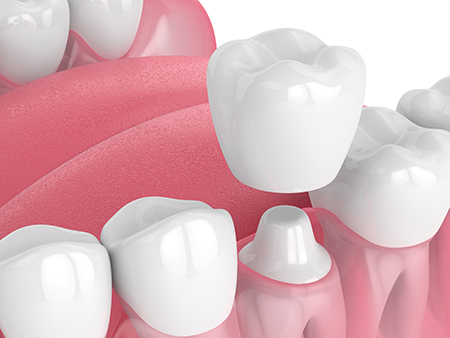
Our process begins with a thorough examination and digital records to evaluate the tooth and surrounding structures. We assess bite relationships, gum health, and how the tooth fits within your overall smile so the final crown looks natural and functions comfortably.
When preparation is needed, we carefully shape the tooth to create space for the restoration while preserving as much natural tooth as possible. Impressions or digital scans capture precise details that allow the laboratory or in-office milling system to fabricate a crown with excellent fit.
Once the crown is ready, we check its color, contour, and bite before permanently placing it. Minor adjustments are common and are completed quickly to ensure comfort. After cementation, we review home care and regular maintenance to help the restoration last for many years.

At SmileArts Dental, attention to detail guides everything we do. From shade selection to occlusal adjustments, we focus on predictable results that meet both functional needs and cosmetic goals. Our approach emphasizes communication and precision so you know what to expect at every step.
We combine clinical experience with modern materials and digital tools to create crowns that fit accurately and look natural. Whether a restoration needs to blend discreetly in the smile zone or withstand heavy chewing in the back, our treatment plans are individualized for reliable outcomes.
Aftercare is part of our commitment. We’ll advise on how to protect your new crown, when to schedule routine exams, and measures to minimize wear—helping the restoration perform well for years to come.
In summary, ceramic crowns offer a versatile, aesthetic, and durable way to restore compromised teeth. If you’d like to learn whether a ceramic crown is the right solution for your situation, please contact us for more information.


Ceramic crowns are full-coverage, metal-free restorations crafted from dental ceramics that replace the visible portion of a damaged tooth. They are designed to restore shape, strength and the way a tooth interacts with light, producing a natural appearance. Unlike crowns that contain a metal substructure, all-ceramic restorations eliminate visible dark margins and reduce concerns related to metal sensitivities.
Modern ceramic formulations such as lithium disilicate and high-translucency zirconia offer a range of aesthetic and strength properties so clinicians can match the material to the clinical need. These materials can be fabricated in a dental laboratory or milled in-office using CAD/CAM systems for precise fit; clinics such as SmileArts Dental use these options to balance esthetics and efficiency. The result is a durable, lifelike restoration suitable for many situations where appearance matters as much as function.
A ceramic crown is typically recommended when a tooth has lost too much structure for a predictable filling or when a large fracture compromises strength. Crowns are commonly used after extensive decay, to complete root canal-treated teeth, and to restore teeth that support bridges or implants. They distribute chewing forces across the remaining tooth and protect against future fractures.
The choice between a crown, an onlay, or a filling depends on how much healthy enamel remains and the tooth's position and function in the mouth. Back teeth that endure heavy bite forces may need stronger, more fracture-resistant ceramics, while front teeth often prioritize translucency and color matching. A thorough clinical exam and digital records help determine the most conservative and durable option.
Common ceramic materials include lithium disilicate, leucite-reinforced porcelain, monolithic zirconia, and high-translucency zirconia, each offering different balances of strength and aesthetics. Lithium disilicate provides excellent translucency with good strength for many anterior and premolar restorations. Leucite-reinforced porcelains are prized for lifelike color and layering ability on front teeth, while monolithic zirconia is engineered for maximum strength in molars and for patients with heavy bite forces.
High-translucency zirconia narrows the gap between strength and appearance, making it useful when both properties are needed. Material selection considers the tooth's location, occlusal stress, and the patient's aesthetic expectations. Your dentist will explain the trade-offs so you understand why a particular ceramic is recommended.
Dentists evaluate several clinical factors when choosing a ceramic for your crown, including the amount of remaining tooth, where the tooth sits in the mouth, and how you bite and chew. Shade matching, gum line contours, and any metal restorations nearby also influence the decision. Diagnostic tools such as digital scans, photographs, and bite records give objective data to guide material choice.
In some cases, a trial restoration or mock-up helps visualize the result before final fabrication. For patients who grind their teeth or have an uneven bite, stronger monolithic materials or occlusal adjustments may be recommended. Clear discussion between clinician and patient ensures an informed choice.
The process begins with a comprehensive examination and digital records to assess tooth structure, gum health, and occlusion. When a crown is indicated, the tooth is prepared by removing decay and shaping it to create adequate space for the ceramic restoration. Digital scans or traditional impressions capture the prepared tooth and surrounding teeth so the crown can be designed with precise fit and contact relationships.
A temporary crown may be placed if the final restoration is fabricated off-site. If the office offers CAD/CAM milling, the final crown can sometimes be designed and produced the same day using in-office systems. Otherwise the crown is tried in, adjusted for fit and color, and then permanently cemented or bonded with a final bite check.
Ceramic crowns are commonly used to protect teeth after root canal therapy because the endodontically treated tooth can become brittle and benefit from full coverage. The crown restores function and seals the tooth against bacterial invasion along margins. Proper material selection and fit are important to minimize stress concentrations that could lead to fracture.
Ceramic crowns are also used to restore implant abutments, typically on a custom abutment designed to support the crown and achieve a natural emergence profile. When used on implants, the crown may be screw-retained or cemented depending on clinical preferences and retrievability considerations. Digital planning helps ensure the implant-supported crown is esthetic and functional.
At SmileArts Dental our team combines digital scanning, modern ceramic materials and precise shade-matching protocols to deliver reliable crown restorations. We use evidence-based preparation techniques and CAD/CAM technology when appropriate to optimize fit and function. These tools help us minimize adjustments and achieve predictable outcomes for a range of restorative needs.
We also prioritize clear communication so patients understand the steps, material options and aftercare required for long-term success. Routine follow-up exams and occlusal checks are part of our approach to monitor crowns and address wear or changes over time. This focus on planning and ongoing care supports durable, natural-looking restorations.
The lifespan of a ceramic crown varies with material choice, oral hygiene, bite forces and how the restoration is cared for, but many crowns last for a decade or longer under favorable conditions. Crowns made from high-strength ceramics tend to resist fracture better in posterior teeth, while highly esthetic ceramics may be more susceptible to chipping if placed under excessive stress. Regular dental exams and good home care are key factors that influence longevity.
Habits such as grinding, chewing ice, or using teeth as tools can shorten a crown's life and may prompt recommendations for protective measures like a night guard. Properly contoured margins and good periodontal health also help prevent decay at crown interfaces. Prompt attention to sensitivity or looseness can allow repairs or replacement before more extensive treatment is required.
Possible complications with ceramic crowns include post-operative sensitivity, marginal decay if hygiene is inadequate, chipping or fracture of the ceramic, and issues with fit or bite that require adjustment. Sensitivity often decreases with time but persistent discomfort should be evaluated to rule out underlying problems. If a crown chips or fractures, minor repairs may be possible depending on the material and location.
A poor marginal fit can increase the risk of recurrent decay and should be corrected. Careful planning, accurate impressions or scans, and proper occlusal adjustment reduce the likelihood of many complications. Regular professional care allows early detection and management of problems to protect the restored tooth.
Alternatives to ceramic crowns include direct composite fillings, inlays and onlays, porcelain veneers for mainly cosmetic concerns, orthodontic treatment when alignment is the primary issue, and implant-supported crowns when a tooth is non-restorable. Inlays and onlays preserve more tooth structure than full crowns and can be suitable for moderate damage. Veneers are limited to the front surfaces of teeth and are not appropriate when extensive structural support is needed.
The best restorative choice depends on the extent of tooth damage, functional needs and aesthetic goals, and the clinician will explain the pros and cons of each option. Where possible, conservative approaches that preserve healthy tooth structure are preferred. A shared decision-making process helps ensure the chosen treatment aligns with long-term oral health and patient expectations.

Ready to Experience the SmileArts Dental Difference?
We’re here to help you take the next step toward a healthier, more confident smile. Whether you’re ready to schedule an appointment or want to learn more about our services, our friendly team is ready to assist you.
Our staff is happy to answer questions about treatment options, help you schedule your visit, and provide any information you need. Give us a call or fill out our quick online form today—we can’t wait to hear from you!