When decay or damage weakens a tooth, a filling is one of the simplest and most effective ways to rebuild its shape and restore normal chewing function. A properly placed filling seals the affected area, prevents further breakdown, and helps keep surrounding teeth and gums healthy.
Fillings are a cornerstone of conservative dentistry: they allow us to treat a problem early and preserve as much natural tooth structure as possible. The process typically focuses on removing compromised material, disinfecting the site, and restoring the tooth so it blends with your bite and appearance.
At the office of SmileArts Dental, we emphasize careful diagnosis and minimally invasive treatment so your restoration lasts and looks natural. Our goal is to deliver results that support long-term oral health while returning comfort and confidence to your smile.
Human attempts to repair teeth date back millennia, but modern dentistry’s material science accelerated in the last two centuries. Early restorations relied on metals like gold and later on amalgam, which was prized for durability. While those options were practical, they were not designed with aesthetics in mind.
Over recent decades, the industry has focused on materials that mimic tooth structure in color and behavior. Today’s options range from tooth-colored composites to lab-crafted ceramics, giving clinicians the ability to choose a solution that balances longevity, appearance, and tooth conservation.

Not every filling is the same. The right material depends on the location of the cavity, the amount of remaining tooth, your bite forces, and cosmetic preferences. We evaluate each case individually and recommend materials that meet your functional needs while matching the look of your natural teeth.
Composite fillings are made from a resin matrix mixed with fine glass or ceramic particles. They are shaded to blend with your enamel and can be bonded directly to the tooth, which helps reinforce weakened structure. Because they require less removal of healthy tooth tissue than some older options, composites are often the choice for visible front and back teeth where appearance matters.
Composites offer a very natural result, though they can wear differently than enamel over many years and may need replacement or maintenance depending on your habits and oral environment.
Amalgam has a long history of reliable performance, especially in areas that endure heavy chewing pressure. This metal-based material is strong and resistant to fracture, which made it the workhorse of restorative dentistry for decades.
Amalgam is less commonly used now for visible teeth because it doesn’t match tooth color, but it remains a practical option for certain posterior restorations where durability is the primary concern.
Glass ionomer materials bond chemically to the tooth and slowly release fluoride, which can be beneficial in helping protect against further decay. They are often selected for small restorations near the gum line, pediatric cases, or as temporary solutions when a longer-term restoration is planned.
While convenient and protective, glass ionomers are generally less wear-resistant than composites or ceramics, so their use is tailored to lower-load situations.
Ceramic restorations are fabricated in a lab to precisely fit the prepared tooth and are prized for their strength and stain resistance. Because they can be color-matched and polished to a lifelike finish, ceramics are an excellent choice for patients seeking a durable, highly aesthetic result.
These are indirect restorations—meaning they are made outside the mouth and bonded in place—which can preserve more healthy tooth and provide long-term stability when properly cared for.
Gold alloys offer outstanding durability and a proven track record when used for inlays, onlays, or crowns. They are biocompatible and wear in a manner that is gentle on opposing teeth, making them a respected option for certain clinical situations.
While less commonly selected for purely aesthetic reasons today, gold maintains a place in restorative dentistry for its longevity and predictable performance.
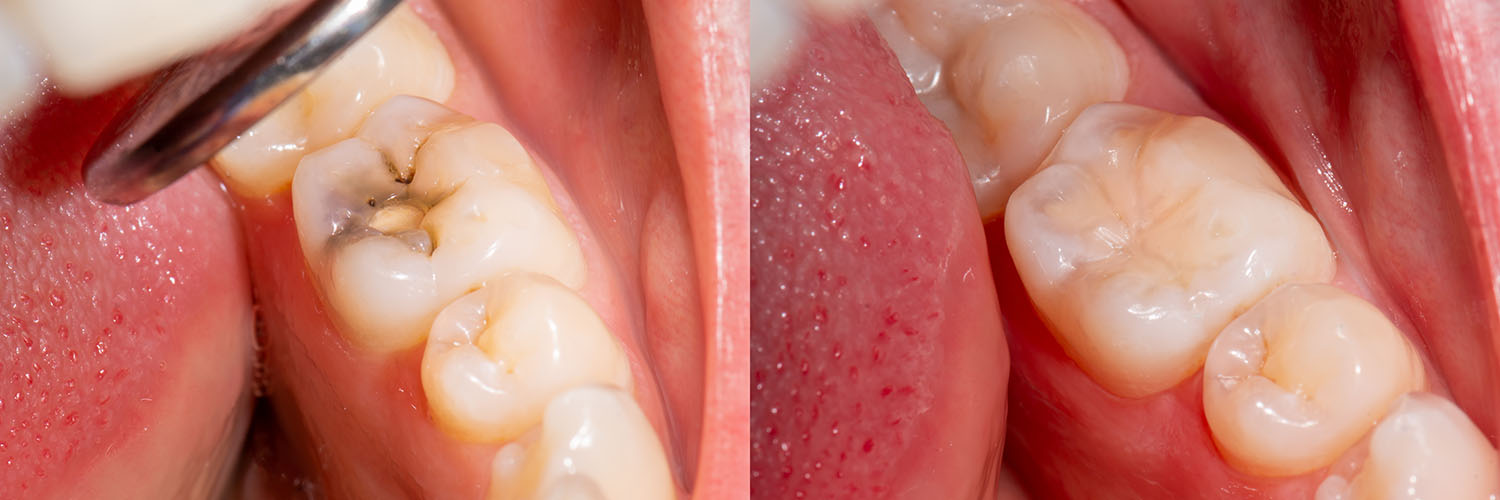
When a cavity is identified, your appointment will focus on removing decay and restoring the tooth in a single, well-organized visit in most cases. We begin with a thorough exam and, if appropriate, digital imaging to understand the extent of the lesion and plan the least invasive repair.
To keep you comfortable, local anesthesia is used when needed so you should feel no pain during the procedure. Our clinicians then remove softened or damaged material and prepare the tooth for the selected restoration. The approach differs depending on the chosen material—composites are placed and shaped directly, while ceramics or gold onlays may require a short series of visits for fabrication and final placement.
Advanced tools — from precise rotary instruments to air abrasion and lasers in some instances — allow us to conserve healthy enamel and dentin while ensuring the tooth is clean and ready to bond with the filling material. Most routine fillings can be completed in about an hour, though complex cases take a bit longer.
If nervousness about dental work is a concern, discuss comfort options with us before your appointment. The practice offers several approaches to help patients relax during procedures, and we tailor care to each person’s needs and preferences.
After your procedure, a few straightforward precautions will help the restoration settle and perform well. You may experience temporary numbness until the local anesthetic wears off, so avoid chewing until normal sensation returns to prevent accidental biting of the cheek or tongue.
Below are some practical reminders that support healing and long-term performance of your new filling:
Protect the numb area:
While the anesthesia is active, be careful with food and hot drinks and try not to chew until you can feel the area normally again.
Expect mild bite awareness:
Your mouth may notice the new shape for a short time. If you sense an uneven bite after the numbness dissipates, call our office and we can make minor adjustments to improve comfort and function.
Sensitivity is common but usually brief:
Slight sensitivity to temperature or pressure can occur for a few days after placement. It generally resolves on its own, but persistent or worsening discomfort should be evaluated.
Maintain excellent oral hygiene:
Brushing, flossing, and routine dental visits help extend the life of any restoration. Although filling materials are durable, they are not immune to wear or recurrent decay at the margins, so regular care is important.
Our team is committed to providing clear post-treatment guidance and answering any follow-up questions you may have. If concerns arise after your appointment, please reach out so we can assess and address them promptly.
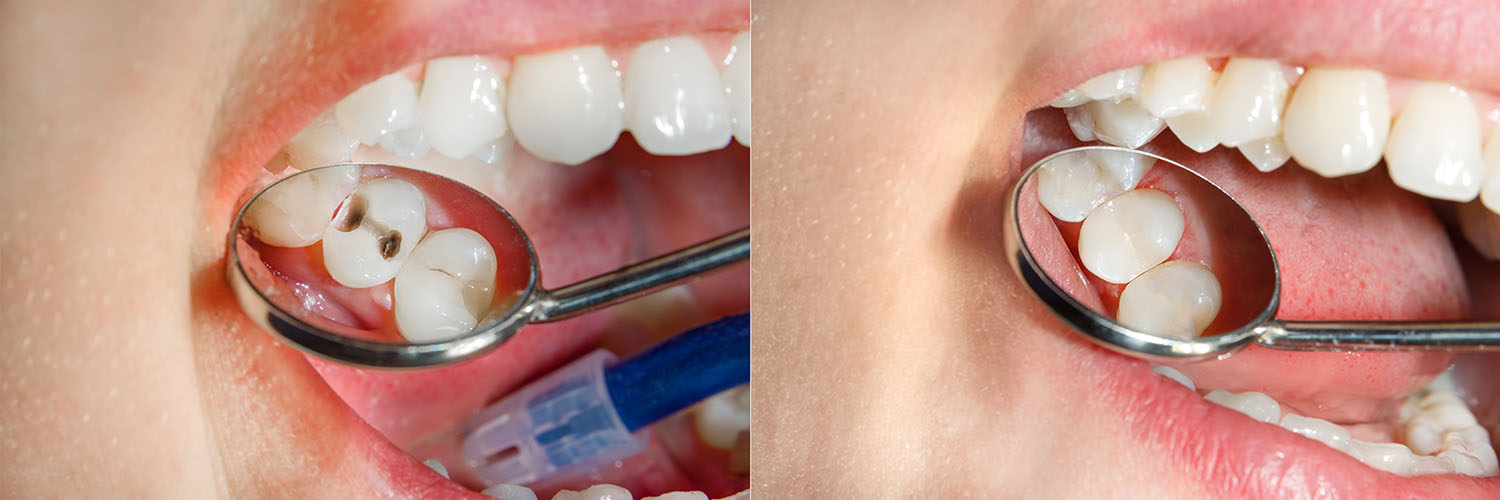
Dental fillings are a reliable, conservative way to stop decay, restore tooth function, and preserve a natural-looking smile. Advances in materials and techniques give clinicians many choices, allowing restorations that balance strength, longevity, and aesthetics for each patient.
If you have questions about the best option for a particular tooth or would like to schedule an evaluation, please contact our office for more information. Our team is happy to explain treatment choices and create a plan that aligns with your oral health goals.


Dental fillings are restorations used to repair teeth that have been weakened by decay or minor damage. The dentist removes compromised tooth structure, disinfects the area, and places a material that restores the tooth's shape and function. Properly placed fillings seal the treated area to prevent further breakdown and help maintain the health of adjacent teeth and gums.
Fillings are a conservative treatment that allow clinicians to preserve as much natural tooth as possible while restoring chewing ability and appearance. Advances in materials and bonding techniques help restorations blend with the tooth and support long-term oral health. Choosing the appropriate material and technique reduces the chance of recurrent problems and extends the life of the restored tooth.
Common filling materials include tooth-colored composite resin, traditional dental amalgam, glass ionomer cement, lab-made ceramics for inlays and onlays, and gold alloys. Composite resins are favored for their esthetic match to surrounding enamel and ability to bond to tooth structure, while amalgam remains durable in high-stress posterior locations. Glass ionomer binds chemically to the tooth and releases fluoride, making it useful in certain pediatric or low-load situations.
Ceramic inlays and onlays are indirect restorations made in a lab for a precise fit and excellent esthetics, and gold offers long-term durability with gentle wear on opposing teeth. Each material has trade-offs in wear resistance, appearance, and how much healthy tooth structure must be removed. Your clinician will weigh these factors along with the tooth’s location and your functional needs when recommending a material.
The selection of a filling material depends on the tooth's location, the size and depth of the cavity, your bite forces, cosmetic priorities, and the amount of remaining healthy tooth. Front teeth and visible areas often benefit from composites or ceramic options that match enamel color, while posterior teeth with high chewing pressure may warrant stronger materials. We also consider factors such as moisture control during placement, any history of sensitivity, and long-term durability.
A careful clinical exam and, when appropriate, digital imaging help determine the least invasive solution that will provide lasting function and appearance. Your preferences and lifestyle are part of the discussion, and we will explain why a particular material is recommended for your situation. The goal is a restoration that balances strength, longevity, and esthetics for your individual needs.
A typical appointment begins with an exam and any necessary digital X-rays to assess the extent of decay and plan the restoration. Local anesthesia is used when needed to keep you comfortable while the clinician removes softened tooth material and prepares the cavity. For direct restorations like composites, the material is placed, shaped, and cured in the same visit; indirect restorations such as ceramic inlays may require an impression and a second visit for final placement.
Advanced instruments such as precise rotary tools, air abrasion, and bonding systems help conserve healthy tooth structure and improve the restoration's fit. Most routine fillings can be completed in about an hour, though larger or more complex cases take longer. Before you leave, the bite is checked and adjusted to ensure comfort and proper function.
Most patients experience little to no pain during a filling because local anesthesia numbs the treated area and prevents discomfort. You may feel pressure or vibration from the instruments, but true pain should not occur while the anesthesia is effective. If you have dental anxiety, discuss comfort options with the team prior to treatment so they can recommend strategies to help you relax.
After the procedure, mild soreness or sensitivity is common for a few days as the tooth and surrounding tissues settle. This sensation typically resolves without intervention, but persistent or worsening pain should be evaluated promptly to rule out high bite points, remaining inflammation, or other issues. The practice offers follow-up adjustments when needed to restore comfort and function.
Immediately after a filling, protect the numb area by avoiding chewing until normal sensation returns to prevent accidental biting of the cheek or tongue. Maintain good oral hygiene by brushing twice daily with a fluoride toothpaste and flossing daily to prevent decay at the margins of the restoration. If your dentist notes any temporary bite awareness, return for a brief adjustment to improve comfort.
Long-term care relies on regular dental checkups and cleanings so the team can monitor the integrity of the filling and detect early signs of wear or recurrent decay. Avoiding highly abrasive toothpaste and excessively hard foods can reduce unnecessary stress on restorations. With proper oral hygiene and routine maintenance, many restorations provide reliable service for years.
Temporary sensitivity after a filling is common and often related to irritation of the tooth’s nerve from decay removal, the restorative process, or bite changes. Sensitivity typically manifests as short-lived discomfort to hot, cold, or biting forces and usually subsides within a few days to weeks as the nerve calms. Mild, transient sensitivity does not necessarily indicate a problem, but it should be monitored.
You should contact the office if sensitivity is severe, persistent, or gets worse over time, or if you experience swelling or throbbing pain. These symptoms can signal a high bite, a crack, deep decay near the pulp, or need for further treatment such as a root canal. Prompt evaluation ensures the appropriate corrective steps can be taken and reduces the risk of more extensive procedures later.
Inlays, onlays, and crowns are indirect restorations that are chosen when a tooth has lost a substantial amount of structure or sustained fractures that simple fillings cannot reliably restore. When decay or damage extends beyond what a direct filling can support, an inlay or onlay can conserve remaining tooth while providing superior strength and fit. Crowns are used when the tooth requires full coverage to protect weakened walls and restore function.
These options are fabricated outside the mouth and then bonded or cemented in place, which can offer greater longevity and resistance to fracture compared with large direct restorations. Your dentist will assess the tooth’s remaining structure, occlusion, and long-term prognosis to recommend the most durable solution. Choosing an indirect restoration can often preserve tooth function and reduce the likelihood of future failure.
Whether an old filling can be repaired or should be replaced depends on its condition, the presence of recurrent decay, and the degree of marginal breakdown or fracture. Small, localized defects or rough margins may be amenable to repair or smoothing, which preserves tooth structure and extends the restoration’s life. In contrast, large failures, recurrent decay, or significant fracture usually require complete replacement or an upgrade to an inlay, onlay, or crown.
During routine examinations and X-rays, your dentist evaluates existing restorations and discusses options based on longevity and tooth preservation. Replacement decisions balance removing compromised material with conserving healthy tooth tissue to achieve a predictable outcome. Timely attention to worn or failing restorations helps prevent more extensive restorative needs in the future.
To schedule an evaluation or treatment for a filling, call the practice during office hours and request an appointment for a restorative consultation or decay treatment. New patients may call (405) 225-7472 and existing patients may call (405) 577-2444 to speak with the front desk; the office is located at 820 S. Mustang Road, Yukon, OK 73099. During your call the team will confirm your medical history, any current concerns, and the best time to book an appointment that fits your needs.
At your visit the clinician will perform a thorough exam and recommend the least invasive, most appropriate restoration based on the tooth’s condition and your goals. If you have questions about comfort options, materials, or the treatment process, let the team know when scheduling so they can allocate time to discuss your preferences. The practice strives to make the process clear and comfortable from evaluation through restoration.

Ready to Experience the SmileArts Dental Difference?
We’re here to help you take the next step toward a healthier, more confident smile. Whether you’re ready to schedule an appointment or want to learn more about our services, our friendly team is ready to assist you.
Our staff is happy to answer questions about treatment options, help you schedule your visit, and provide any information you need. Give us a call or fill out our quick online form today—we can’t wait to hear from you!