Advances in dental materials and techniques have changed what's possible for people who need to replace missing teeth. While dental implants and fixed bridgework are powerful long-term solutions for many patients, removable dentures remain a dependable option for restoring a natural-looking smile and reliable oral function.
At SmileArts Dental, we craft dentures using modern materials and careful fabrication methods to prioritize comfort, speech, and chewing function. Our goal is to create prosthetics that harmonize with your facial contours and give you a confident smile you can rely on every day.
Every patient’s situation is unique, so we focus on personalized treatment plans that consider oral health, daily needs, and long-term goals. Whether you need a partial denture to replace a few teeth or a complete set for an entire arch, our approach emphasizes predictable outcomes and lasting results.
Losing a tooth — or multiple teeth — affects more than appearance. Gaps in your smile can make speech and chewing more difficult, limit food choices, and create uneven forces that shift nearby teeth. Over time, those changes can influence bite alignment and the way your facial tissues look and feel.
Beyond the mechanical effects, tooth loss can have an emotional impact. People often tell us they feel self-conscious about smiling or speaking in public. A well-designed denture can restore both function and confidence, allowing you to engage fully in social and family life without worry.
Because the mouth changes with age and after extractions, early evaluation and appropriate replacement can help preserve the health of remaining teeth and the contours of your face. A restoration tailored to your anatomy supports efficient chewing and helps maintain the balance between teeth, gums, and bone.
Dentures are removable prosthetic devices that replace missing teeth and the surrounding gum tissue. They include artificial teeth set into a supportive base that rests on the gums. Dentures are designed to be taken out for cleaning and maintenance, which helps protect the underlying tissues and any remaining natural teeth.
Contemporary denture materials and fabrication techniques allow for teeth and bases that look more natural and resist wear and staining better than older generations of prosthetics. Careful shade selection, tooth shape, and the way a denture meets your bite are all considered to produce an attractive, functional outcome.
Removability is a practical advantage for many people: it lets you clean the prosthesis thoroughly and lets soft tissues rest overnight. For patients who desire extra retention, dentures can be combined with attachments or implants to offer enhanced stability while retaining the convenience of a removable appliance.

There’s no single denture style that fits every case. We evaluate your oral health, the number of missing teeth, the condition of remaining teeth, and your lifestyle to recommend the best type of prosthesis. Broadly speaking, options include complete (full) dentures, partial dentures, and implant-assisted designs that blend removable convenience with improved retention.
Complete dentures replace an entire upper or lower arch when all teeth in that arch are missing or require removal. Partial dentures fill the spaces where several teeth are absent while preserving healthy adjacent teeth. Each approach has advantages that make it appropriate for different clinical scenarios.
For patients seeking greater stability, overdentures and implant-supported dentures offer attachment systems that secure the prosthesis to underlying teeth or dental implants. These hybrid approaches can dramatically increase chewing efficiency and reduce movement during speaking and eating.
When all teeth in an upper or lower jaw are missing, a complete denture recreates the appearance and function of a full set of teeth. Fabrication involves careful impressions, jaw relationships, and esthetic selections to produce a denture that sits comfortably while supporting facial structure.
An immediate denture is placed at the time of extractions so a patient does not go without teeth during healing. While this preserves appearance and function right away, tissues remodel as healing progresses and adjustments or relining are commonly needed later. Overdentures, by contrast, gain retention from remaining tooth roots or attachments to implants, providing extra support and improved chewing ability.
Overdentures and attachments
Overdentures use retained roots or attachments that help stabilize the prosthesis. These options preserve bone and offer a stronger connection than a conventional denture alone.
Implant-assisted retention
Strategically placed dental implants can anchor a denture to the jaw, reducing slippage and increasing confidence while speaking and eating. Implant attachments are chosen based on arch anatomy and patient goals.
Immediate placement choices
Immediate dentures preserve appearance during the healing phase but typically require follow-up care to reline or refit as tissues change. They are a thoughtful interim solution for many patients.
Partial dentures are designed to replace several missing teeth while integrating with the remaining natural dentition. They stabilize the bite, prevent teeth from drifting, and restore chewing function without altering healthy adjacent teeth permanently.
Modern partial frameworks are available in a range of materials—from cast metal to flexible resins—that can be selected for strength, comfort, and esthetics. Precision attachments and discreet clasps help blend the prosthesis with your natural smile.
Regardless of the material or attachment style, precise planning and attention to occlusion (how the teeth meet) are critical to long-term comfort and performance of a partial denture.
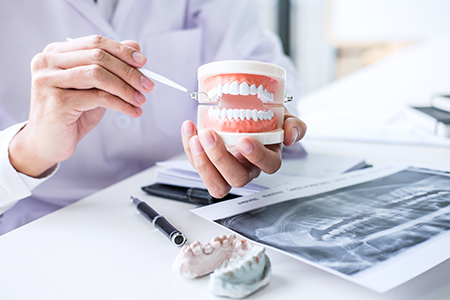
Creating a denture that functions well requires both clinical evaluation and an artistic eye. We begin with a detailed review of your medical and dental history, a clinical exam, and, when helpful, digital imaging to assess bone and tissue contours. This diagnostic phase informs the design and attachment strategy.
Impressions, bite records, and careful tooth selection are completed in stages so the final prosthesis reflects proper alignment, comfortable function, and a natural appearance. We prioritize an approach that minimizes surprises and helps you understand each step of the process.
Sometimes preparatory work such as extractions, minor tissue adjustments, or periodontal care is needed to create a stable foundation. When implants are part of the plan, placement and healing timelines are coordinated so the prosthesis will meet long-term stability and comfort goals.
Throughout treatment, clear communication and realistic expectations are central. We review care instructions, adaptation timelines, and follow-up schedules so you know when to expect adjustments and when to return for routine checks.

Adapting to a new denture usually takes a little time. It’s common to experience increased saliva, slight speech changes, or initial pressure points. These are normal responses that improve as your muscles and tissues accommodate the prosthesis. Gentle practice speaking and eating soft foods at first can speed the adjustment period.
Proper daily care keeps dentures looking and performing their best. Rinse them after meals, brush them with a soft brush designed for prosthetics, and soak them overnight in water or a recommended cleaning solution. Clean and care for any remaining natural teeth and soft tissues as part of your routine.
Regular dental checkups are important to monitor fit, function, and oral health. As jawbone and gum tissues change over time, relines or adjustments may be necessary to preserve comfort and prevent sore spots. When dentures are supported by attachments or implants, we also check those components to ensure continued stability.
Adjustments and fine-tuning
Minor adjustments are often needed after insertion to eliminate pressure points and improve comfort. If you notice persistent soreness, schedule a follow-up so we can evaluate fit.
Speaking and eating with confidence
Practicing speaking aloud and gradually reintroducing firmer foods helps you regain normal eating patterns. Using both sides of the mouth evenly and cutting food into smaller pieces can make the transition easier.
Keeping your mouth healthy
Remove dentures at night to let tissues rest and maintain a cleaning routine for both your prosthesis and any remaining teeth. Routine exams let us detect changes early and recommend timely care.
When extra retention is desired
If you find a conventional denture moves too much, attachments, adhesives, or implant options can provide extra security. We’ll review which choices best match your anatomy and goals.
We are committed to guiding each patient through the denture process with clarity and care. If you would like more information about denture options, adjustments, or how a prosthesis could fit into your overall treatment plan, please contact us for a consultation.


Dentures are removable prosthetic devices that replace missing teeth and the surrounding gum tissue. They consist of artificial teeth set into a supportive base that rests on the gums and can restore chewing, speech, and facial support. Modern dentures use advanced materials and careful fabrication techniques to provide a more natural appearance and improved wear resistance than older options.
Dentures benefit people who have lost several or all teeth in an arch and who prefer a nonpermanent restoration or are not candidates for fixed implants. They can also serve as an immediate solution after extractions to preserve appearance during healing. A thorough clinical evaluation helps determine whether a complete denture, partial denture, or an implant-assisted option is the best fit for a patient’s needs.
Denture options include complete (full) dentures, removable partial dentures, and implant-assisted or overdenture designs. Complete dentures replace all teeth in an upper or lower arch, while partial dentures fill gaps when some natural teeth remain. Implant-assisted dentures use attachments or implants to increase retention and stability without sacrificing removability.
Materials and attachment styles vary to balance strength, comfort, and esthetics for each case, from metal or acrylic frameworks to flexible resin bases. Precision attachments and discreet clasps help integrate partials with remaining teeth, whereas overdentures can preserve bone by using retained roots or implants. Careful planning and occlusal considerations guide the selection so the prosthesis fits the patient’s anatomy and lifestyle.
Implant-assisted dentures use dental implants or retained roots as anchors to improve stability and chewing efficiency. Instead of relying solely on suction or adhesives, these dentures attach to implant fixtures or precision attachments that reduce movement during speaking and eating. The result is greater confidence in function and often improved comfort compared with a conventional removable denture.
Implant-assisted options require a preliminary surgical phase to place implants and a healing period for osseointegration, which is evaluated before the final prosthesis is connected. Once in place, the attachments are checked periodically to ensure continued stability and proper maintenance. This hybrid approach combines the convenience of a removable prosthesis with the functional benefits of fixed support when clinically appropriate.
The denture process begins with a comprehensive exam, medical and dental history review, and diagnostic records such as impressions and bite registrations. These steps allow the dental team to evaluate bone and tissue contours, plan any necessary preparatory treatment, and design a prosthesis that supports proper function and esthetics. The process typically includes try-in stages so fit, tooth position, and appearance can be adjusted before final fabrication.
At SmileArts Dental our team communicates timelines and follow-up expectations clearly so patients understand adaptation periods and when adjustments may be needed. Preparatory care can include extractions, minor tissue modification, or periodontal treatment to create a stable foundation for the denture. After delivery, routine checkups are scheduled to monitor fit and oral health as tissues change over time.
Adjustment to new dentures varies by individual but most patients notice steady improvement over several weeks. Early experiences commonly include increased saliva, minor speech changes, and sensitivity to pressure points, all of which typically diminish as muscles and tissues adapt. Practicing speaking aloud and starting with soft foods while gradually reintroducing firmer items helps speed functional recovery.
Follow-up visits are important during the initial weeks so the dentist can make minor adjustments to relieve sore spots and refine occlusion. If problems persist beyond the adaptation phase, relining or additional modifications can improve comfort and performance. Regular care and realistic expectations support a smoother transition to everyday use.
Daily denture care preserves appearance, function, and oral health for both the prosthesis and remaining natural teeth. Rinse dentures after meals to remove debris, brush them with a soft brush designed for prosthetics, and soak them overnight in water or a recommended cleaning solution to keep them sanitary. Avoid using hot water or abrasive cleaners that can warp or scratch the denture base and teeth.
Care for your soft tissues and any remaining teeth by brushing and flossing as recommended, and remove dentures at night to allow tissues to rest. Bring your dentures to regular dental appointments so the dentist can check fit, inspect attachment components when present, and recommend relines or maintenance as needed. Good routine care extends the life of the prosthesis and supports overall oral health.
Changes in jawbone and gum tissue over time commonly require denture adjustments, relines, or eventual replacement to maintain fit and comfort. After extractions and healing, an immediate denture often needs relining as tissues remodel, and conventional dentures may need periodic relines to correct fit as bone resorbs. Persistent soreness, slippage, or difficulty chewing are signs a denture should be evaluated sooner rather than later.
Regular dental checkups allow early detection of changes and timely intervention to prevent chronic sore spots or tissue irritation. When dentures are retained by attachments or implants, those components should also be inspected and serviced according to the manufacturer’s and clinician’s recommendations. Replacement is considered when wear, structural compromise, or anatomical changes prevent predictable, comfortable function.
New dentures can temporarily affect speech and chewing while you adapt to the feel and function of the prosthesis. Pronunciation changes often improve with practice; reading aloud and repeating difficult sounds can help retrain muscle memory. For eating, begin with soft foods cut into small pieces and use both sides of the mouth evenly to stabilize the denture during chewing.
If speech or eating difficulties persist, the dentist will evaluate occlusion, tooth position, and fit to determine whether adjustments or refinements are needed. Attachment systems or implant-assisted retention can reduce movement and improve both speech and mastication for patients who need extra stability. Ongoing communication with the dental team ensures targeted solutions that restore comfort and function.
Many patients require preparatory dental care to create a healthy, stable foundation for a denture. This can include extractions of unsalvageable teeth, periodontal therapy to manage gum disease, and minor soft-tissue adjustments to shape the ridge for better fit. Digital imaging and diagnostic records help the dental team plan the restoration and sequence any required treatments efficiently.
When implants are part of the plan, implant placement and healing timelines are coordinated with prosthetic fabrication to achieve long-term stability. The dentist will also review medical history and medications that could affect healing or denture function so expectations and aftercare are clear. Proper preparation reduces complications and supports predictable long-term outcomes.
Personalized denture care begins with a detailed examination, review of medical history, and a discussion about lifestyle goals and esthetic preferences. Precise impressions, bite records, and staged try-ins allow the dental team to tailor tooth selection, base contours, and occlusion to each patient’s anatomy and daily needs. This careful approach minimizes surprises and helps achieve a natural appearance with reliable function.
We emphasize clear communication, realistic expectations, and scheduled follow-ups so patients understand adaptation timelines and maintenance requirements. Whether a patient needs a partial denture, a complete set, or an implant-assisted solution, treatment is guided by clinical findings and personal priorities to support long-term oral health and confidence.

Ready to Experience the SmileArts Dental Difference?
We’re here to help you take the next step toward a healthier, more confident smile. Whether you’re ready to schedule an appointment or want to learn more about our services, our friendly team is ready to assist you.
Our staff is happy to answer questions about treatment options, help you schedule your visit, and provide any information you need. Give us a call or fill out our quick online form today—we can’t wait to hear from you!