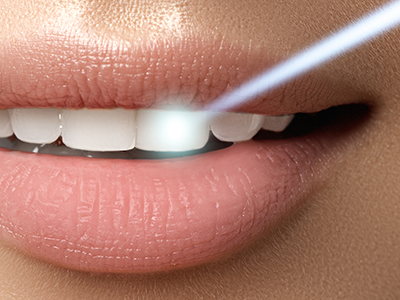
Laser dentistry uses tightly focused beams of light to interact with oral tissues in controlled ways. Unlike hand instruments or high-speed burs, dental lasers deliver energy that is absorbed by specific targets — such as soft tissue, bone, or water within a tooth — causing precise cutting, coagulation, or microbial disruption. Modern systems are designed to operate at wavelengths that preferentially affect particular tissues, allowing clinicians to tailor treatment to the clinical goal with minimal collateral impact.
There are two broad categories of dental lasers commonly used in practice: soft-tissue lasers and hard-tissue lasers. Soft-tissue lasers are optimized for gum and mucosal work, providing clean incisions and rapid hemostasis. Hard-tissue lasers are calibrated to interact with enamel and dentin, enabling cavity preparation and other procedures that historically required mechanical rotary instruments. Each type relies on different wavelengths and settings, and practitioners match the device and parameters to the task at hand.
Because laser energy is converted into heat or photonic effects at the treatment site, the interaction is immediate and localized. This physical mechanism explains many of the advantages people notice — such as reduced bleeding, less swelling, and targeted removal of diseased tissue while preserving healthy structures. It also reinforces why laser dentistry is best performed by clinicians trained in the technology: appropriate settings, technique, and safety measures are essential for predictable outcomes.
Dental lasers are versatile and support a wide range of treatments. They are frequently used for periodontal therapy, where laser energy can remove inflamed tissue and help access and disinfect periodontal pockets in conjunction with conventional cleaning. For soft-tissue surgeries, lasers simplify procedures such as frenectomies, gum contouring (crown lengthening or cosmetic reshaping), and the removal of oral lesions or small biopsies.
On the hard-tissue side, lasers can assist with conservative cavity preparation and the selective removal of decayed tooth structure in carefully chosen cases. They can also be used to expose teeth for orthodontic treatment, treat dentin hypersensitivity by sealing tubules, and activate in-office whitening agents to enhance color change. In implant dentistry and restorative workflows, lasers can aid in site management and tissue sculpting when appropriate.
It’s important to recognize that lasers are often an adjunct to — not a full replacement for — traditional methods. For example, complex restorative work, large cavities, or certain surgical needs may still require conventional instruments or a combined approach. A dentist will evaluate each patient’s anatomy, treatment goals, and clinical constraints to determine where laser technology adds value.
One of the most noticeable benefits of laser dentistry is improved patient comfort during and after many procedures. Because lasers can operate without direct mechanical contact, treatments often involve less vibration and pressure than traditional instrumentation. This can reduce the need for local anesthetic in selected cases and help patients who experience dental anxiety feel more at ease during appointments.
From a surgical perspective, lasers provide excellent hemostasis by sealing small blood vessels as they work, which limits intraoperative bleeding and enhances visibility for the clinician. This coagulative effect also supports faster initial healing and can reduce the amount of postoperative swelling. For restorative dentistry, the ability to precisely remove infected tissue while conserving healthy tooth structure supports more conservative outcomes and potentially better long-term tooth vitality.
Infection control and tissue management are additional advantages. Laser light can reduce bacterial levels in a treated area and create a clean field for further restorative steps. Because the energy is delivered selectively, there is often less trauma to surrounding tissues, which translates into quicker recovery and fewer immediate postoperative complications for many patients.
Dental lasers are regulated technologies that require clinical training and an understanding of optical physics, tissue response, and device-specific protocols. Safety measures such as clinician training, calibrated settings, and protective eyewear are standard components of responsible laser use. Proper maintenance and periodic calibration of laser systems are also necessary to maintain consistent performance and minimize risk.
At our practice in Yukon, OK, lasers are used by clinicians who have completed device-specific education and ongoing training to ensure treatments follow current best practices. The choice to use a laser is individualized: we consider the patient’s medical history, the condition of the tooth or soft tissue, and the expected clinical result. When lasers are appropriate, they are integrated into a comprehensive treatment plan rather than applied as a standalone solution.
Because different laser types interact with tissues in distinct ways, clinicians select the device and parameters that best match the intended outcome. This precision reduces unpredictability, but it also underscores the need for experienced operators. Patients benefit from improved treatment planning and clear communication about why laser therapy is recommended, what alternatives exist, and what to expect during care.
Before any laser procedure, patients undergo a thorough evaluation that includes a review of dental and medical history and an assessment of the targeted tissues. This visit often includes diagnostic imaging and a discussion about treatment goals, anesthesia options, and any necessary pre-procedure instructions. Clear communication helps align expectations and prepares patients for a comfortable clinical experience.
During the procedure, patients may notice minimal vibration or pressure compared with traditional drills. Sensations vary depending on the type of laser and the area being treated; in many soft-tissue procedures, laser action produces little to no bleeding due to its coagulative properties. When local anesthesia is required, the amount used is tailored to the individual’s needs and the complexity of the treatment.
After treatment, typical recovery tends to be faster and less symptomatic than comparable procedures using conventional tools. Patients are given simple post-operative care directions — such as maintaining oral hygiene and monitoring the area for changes — and advised on what to expect as healing progresses. Follow-up visits allow the clinician to evaluate tissue response and ensure the outcome aligns with the treatment plan. While laser therapy is beneficial in many situations, there are clinical limits; because of this, some conditions still require traditional surgical or restorative approaches to achieve the best results.
Laser dentistry is a valuable addition to contemporary dental care, offering targeted, conservative treatment options that can improve comfort and recovery for many patients. If you’d like to learn whether laser therapy is appropriate for your needs, contact SmileArts Dental for more information and to discuss your treatment options with our team.


Laser dentistry uses focused light energy to interact with oral tissues in controlled ways, producing effects such as cutting, coagulation and microbial reduction. Different wavelengths are absorbed by different targets — for example, water in soft tissue or hydroxyapatite in enamel — so clinicians select devices and settings to match the treatment goal. The localized nature of laser energy explains why treatments can be precise and why trained operators are essential for predictable results.
When the laser energy reaches the target tissue it is converted into heat or photonic effects that cause immediate, localized changes at the treatment site. This conversion minimizes damage to surrounding healthy structures when used properly and supports applications that require conservative tissue removal. Proper device maintenance and calibration are part of achieving consistent clinical outcomes with laser systems.
There are two broad categories of dental lasers: soft-tissue lasers and hard-tissue lasers, each optimized for different clinical tasks. Soft-tissue lasers are designed for mucosal and gingival work and provide clean incisions with good hemostasis, while hard-tissue lasers can interact with enamel and dentin for selective removal of decayed material in appropriate cases. Clinicians choose the device based on wavelength, tissue interaction and the clinical objective to ensure safety and effectiveness.
Within those categories there are several specific technologies with unique absorption characteristics, so training in device-specific protocols is important. Settings such as power, pulse duration and tip selection impact how the laser behaves at the tissue interface and must be adjusted for each procedure. Device-specific maintenance, calibration and adherence to manufacturer guidance are part of responsible clinical use.
Lasers can support a wide range of procedures including periodontal therapy, frenectomies, gum contouring, oral lesion removal and small biopsies, where their precision and hemostatic properties are especially useful. On the hard-tissue side, lasers may be used for conservative cavity preparation, dentin desensitization and to expose teeth for orthodontic treatment in selected cases. They are also commonly used to activate in-office whitening agents and to assist with soft-tissue management around implants when clinically appropriate.
It is important to note that lasers are frequently adjunctive rather than wholly replacement tools; complex restorative work, extensive surgical procedures or large cavities may still require conventional instruments or a combined approach. The dentist evaluates anatomy, treatment goals and clinical constraints to determine where laser technology adds value. When integrated appropriately, lasers can streamline workflow and enhance patient comfort in many clinical scenarios.
Patients often experience reduced bleeding and swelling because lasers provide coagulation as they cut, which enhances visibility and can shorten initial healing times. Many people also report less vibration and pressure compared with rotary instruments, which may reduce anxiety and decrease the amount of local anesthesia required for some soft-tissue procedures. The selective removal of diseased tissue while preserving healthy structures can support more conservative restorations and potentially better long-term outcomes.
Additionally, laser light can lower bacterial levels in a treated area and create a cleaner field for restorative steps, which contributes to infection control. Because collateral tissue trauma is often reduced, patients commonly have less postoperative discomfort and a faster return to normal function. Clear preoperative explanation and realistic expectations help patients understand the specific benefits and limits of laser care for their case.
Laser dentistry is safe when performed by clinicians who have received device-specific training and who follow established safety protocols such as use of appropriate eyewear and calibrated settings. Understanding optical physics, tissue response and manufacturer guidelines is necessary to minimize risk and ensure predictable outcomes. Regular maintenance and periodic calibration of laser systems are also essential components of safe practice.
Safety also depends on proper patient selection and treatment planning, including review of medical history and any conditions that might affect healing or laser interaction with tissue. Clinicians document indications, settings and post-treatment follow-up to monitor outcomes and address any complications promptly. Patients should feel free to ask their provider about qualifications and the specific laser technology being used prior to treatment.
Lasers are a valuable addition to contemporary dentistry but are not a universal replacement for traditional instruments in all circumstances. For many soft-tissue procedures and select conservative restorative tasks lasers offer distinct advantages, yet complex restorative work, large cavities or certain surgical needs may still require conventional rotary instruments or a combined approach. The most effective treatment plan balances the strengths of laser technology with proven mechanical and surgical techniques.
Decisions about using lasers are individualized and based on factors such as the tooth or tissue condition, patient medical history and the desired clinical outcome. A careful diagnostic evaluation determines whether a laser, traditional tools or both will deliver the best result. Clear communication about alternatives and expected outcomes is an important part of planning any procedure that incorporates laser therapy.
Before a laser procedure patients undergo a clinical evaluation that includes medical and dental history, diagnostic imaging when appropriate, and a discussion about treatment goals and anesthesia options. This visit establishes a clear plan and prepares the patient for what to expect, including any pre-procedure instructions. Clinicians explain how the laser will be used and review safety measures such as protective eyewear.
During the procedure patients often experience less vibration and pressure compared with drills, and soft-tissue lasers typically produce minimal bleeding due to coagulation. After the procedure healing is often quicker and less symptomatic than comparable treatments performed with conventional tools, though patients are advised to follow specific post-operative care instructions. Follow-up visits allow the clinician to assess healing and ensure the outcome aligns with the agreed treatment plan.
Laser energy can reduce bacterial counts in a treatment site and support disinfection when used in conjunction with conventional cleaning techniques, which can be beneficial in periodontal therapy and certain restorative workflows. The targeted thermal and photonic effects help create a cleaner operative field and may lower immediate postoperative bacterial contamination. This adjunctive antimicrobial action contributes to the overall management of infected or inflamed tissues when applied appropriately.
In cases of dentin hypersensitivity, specific laser protocols can help seal dentinal tubules and reduce sensitivity by altering nerve response and surface permeability. These treatments are case-dependent and require careful selection of wavelength and parameters to be effective and safe. Your dentist can advise whether laser desensitization is suitable for your particular pattern of sensitivity and incorporate it into a broader management strategy.
Yes, lasers are not appropriate for every patient or every condition, and certain systemic conditions or medications can influence healing and laser-tissue interactions. Some anatomic factors, the size and location of lesions, or the extent of decay may limit the effectiveness of laser approaches and necessitate alternative treatments. A thorough medical and dental history helps identify potential contraindications and informs safe treatment planning.
Additionally, not all lasers interact well with every material or tissue type, so device selection and parameter settings are critical and sometimes restrict the procedures that can be performed. Complex surgical cases, very large restorations or situations requiring specific mechanical preparation may still rely on traditional methods. Open discussion with the clinician about risks, benefits and alternatives ensures informed consent and an appropriate treatment pathway.
Start with a consultation and diagnostic evaluation so a clinician can assess your oral health, review your medical history and discuss your goals in detail. During this visit the dentist will explain whether laser therapy is an appropriate option, describe the expected steps of treatment and outline any alternatives that may achieve similar results. Personalized recommendations are based on clinical findings rather than a one-size-fits-all approach.
If you would like to explore laser options, schedule a consultation with SmileArts Dental in Yukon, OK to review your case and learn about the specific technologies we use. Our team will explain qualifications, device types and safety protocols so you can make an informed decision about whether laser care should be part of your treatment plan. Follow-up appointments and treatment sequencing are planned to support predictable healing and long-term oral health.

Ready to Experience the SmileArts Dental Difference?
We’re here to help you take the next step toward a healthier, more confident smile. Whether you’re ready to schedule an appointment or want to learn more about our services, our friendly team is ready to assist you.
Our staff is happy to answer questions about treatment options, help you schedule your visit, and provide any information you need. Give us a call or fill out our quick online form today—we can’t wait to hear from you!