At the office of SmileArts Dental, we take a proactive stance on oral health because preventing problems is far easier than fixing them. Regular oral exams are the cornerstone of that approach: they let our team find early warning signs, address concerns before they become serious, and tailor care to each patient’s needs. In addition to a focused clinical exam, our preventive offerings include professional cleanings, routine screenings for oral cancer, and practical guidance on hygiene, diet, and everyday habits that protect your smile.
Your first appointment is as much about listening as it is about looking. We begin by reviewing your medical and dental history and asking about any symptoms, medicines, or habits that might affect your mouth. Understanding your concerns helps us set priorities and design an examination that addresses both immediate needs and long-term goals.
The clinical portion of the visit covers a careful inspection of your teeth, gums, tongue, and the soft tissues of the mouth. We perform a focused oral cancer screening and evaluate gum health with a periodontal check. Your bite and jaw function are observed as well so we can identify signs of clenching, grinding, or TMJ dysfunction early.
Diagnostic images are recommended when needed to see beneath the surface. Digital radiographs can reveal decay between teeth, the status of the supporting bone, and other conditions that a visual exam alone might miss. After gathering all the information, we’ll explain our findings and discuss sensible options so you leave with a clear plan and realistic next steps.

Oral health doesn’t exist in isolation — the mouth is a mirror of overall health. Inflammation, infection, and other issues in the oral cavity can influence systems throughout the body, while medical conditions and certain medications can produce symptoms that first appear in the mouth. That two-way relationship is one reason routine exams are so important.
Researchers continue to document links between poor oral health and systemic conditions such as digestive disorders, respiratory problems, cardiovascular disease, stroke, diabetes, and even cognitive decline. While dentistry is not the cure-all for these illnesses, early detection of oral signs can prompt timely medical evaluation and collaborative care with your other healthcare providers.
Likewise, conditions that begin elsewhere in the body often show oral manifestations — dry mouth, unusual sores, gum changes, or persistent bad breath can all be clues. During your exam, we look for these signs and, when appropriate, recommend medical follow-up to help coordinate care and protect your overall well-being.

Keeping a smile healthy is a team effort. Daily brushing and flossing lay the foundation, but plaque and tartar can accumulate in places your toothbrush can’t reach. Professional cleanings remove hardened deposits and bacterial buildup, reducing the risk of cavities and gum disease and leaving your mouth feeling fresher and healthier.
Routine exams allow us to monitor changes over time. Regular visits make it easier to catch problems in their earliest, most treatable stages — often before you notice symptoms. That preventative rhythm typically involves examinations and cleanings at intervals we agree on together based on your risk factors, oral status, and personal preferences.
Checkup visits are also an opportunity for individualized education. Our team demonstrates effective homecare techniques, discusses dietary habits that impact oral health, and provides guidance on managing habits such as tobacco use or nightly teeth grinding. For children, routine exams help establish a strong foundation and let us track dental and jaw development so we can recommend orthodontic evaluation when appropriate.
Good visual inspection is essential, but X-rays and other imaging technologies let us see what’s out of sight. Radiographs reveal tooth decay between teeth, the health of bone that supports teeth, the presence of infection, and the position of developing or impacted teeth. That deeper view supports accurate diagnosis and treatment planning.
Modern digital radiography offers many advantages over older film-based systems. Digital images are captured quickly with minimal exposure to radiation, can be enhanced for better clarity, and are available for immediate review. They also integrate easily with electronic records, which helps with long-term tracking and efficient communication with specialists when needed.
Beyond conventional 2D images, three-dimensional imaging such as cone-beam computed tomography (CBCT) provides highly detailed views of the jaws and surrounding structures. CBCT is especially valuable when planning complex treatment, evaluating trauma, or placing dental implants because it shows spatial relationships that standard X-rays cannot.
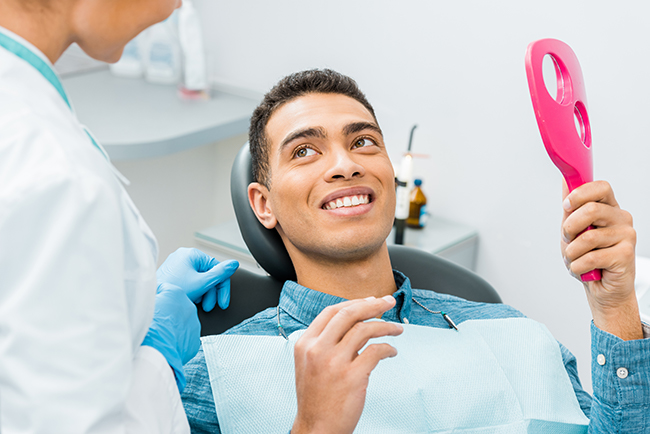
Different images serve different diagnostic purposes, and we choose the type that best answers the clinical question at hand. Small films and bitewings are useful for spotting decay and assessing the crowns of the teeth, while larger or panoramic views show the entire mouth and jaw relationships.
Periapical x-ray - Focused on a single tooth, this image shows the entire structure from crown to root and is helpful for identifying root-related problems or infections.
Bitewing x-ray - Designed to capture the upper and lower teeth in a single view, bitewings are excellent for detecting early decay between teeth.
Full Mouth Series - A comprehensive set of periapical and bitewing images that together provide a detailed picture of every tooth and the surrounding bone.
Panoramic Film (panorex) - This wide-view image captures all teeth and both jaws in a single shot, making it useful for assessing tooth development, impacted teeth, and jawbone health.
Cephalometric Film - Often used in orthodontic assessment, this profile image helps evaluate jaw relationships and facial growth patterns.
When three-dimensional detail is required, CBCT can be used to reconstruct the anatomy in 3D for precise treatment planning. This technology has become an important tool for implant placement, surgical evaluation, and complex restorative cases where accuracy matters most.
Routine oral exams are an essential part of maintaining health and catching issues early. If you'd like to learn more or schedule an oral exam with SmileArts Dental, please contact us for more information.

Your first appointment is as much about listening as it is about looking. We begin by reviewing your medical and dental history and asking about any symptoms, medications, or habits that might affect your mouth. Understanding your concerns helps us set priorities and design an examination that addresses both immediate needs and long term goals.
The clinical portion of the visit includes a careful inspection of your teeth, gums, tongue, and the soft tissues of the mouth and a focused oral cancer screening. We assess periodontal health, bite, and jaw function to identify signs of clenching, grinding, or TMJ dysfunction early. Diagnostic images are recommended when needed and our team explains findings and sensible next steps so you leave with a clear plan.
Most patients benefit from exams at regular intervals, but the ideal frequency depends on individual risk factors. Factors such as gum disease, a history of frequent cavities, systemic health issues, medications, and tobacco use influence how often you should be seen. We tailor a recall schedule to your risk profile, oral status, and personal preferences.
For many people a six month interval balances prevention with convenience, while others may need more frequent monitoring to stabilize gum disease or manage active decay. Children, seniors, and those with certain medical conditions often require customized intervals. We review and adjust your recall plan at each visit based on changes in your oral health.
An oral cancer screening is a systematic exam of the lips, tongue, floor and roof of the mouth, cheeks, and throat to identify suspicious lesions. We look for red or white patches, nonhealing sores, lumps, or changes in texture and mobility that could warrant further evaluation. The screening is quick, painless, and performed as a routine part of adult exams.
If we find an area of concern, we document its appearance and size, compare it to prior records, and may recommend photographic monitoring, biopsy, or referral to a specialist. We also discuss risk factors such as tobacco and alcohol use and provide guidance on appropriate follow up. Early detection improves outcomes, which is why this screening is a standard preventive measure.
Digital radiographs reveal decay between teeth, the condition of supporting bone, and infections that a visual exam alone might miss. These images are captured quickly with minimal radiation, can be enhanced for clarity, and integrate with electronic records for efficient tracking. They improve diagnostic accuracy and help guide conservative treatment decisions.
When three dimensional detail is required, cone beam computed tomography (CBCT) provides precise views of the jaws, tooth positions, and anatomical structures for advanced planning. CBCT is valuable for implant placement, complex surgical cases, and assessing trauma or pathology where 2D films are insufficient. We use CBCT selectively, choosing the imaging that best answers the clinical question while minimizing exposure.
Daily brushing and flossing form the foundation of oral health, but plaque can harden into tartar in areas a toothbrush cannot reach. Professional cleanings remove hardened deposits and bacterial biofilm, reducing the risk of cavities and periodontal disease. Cleanings also allow hygienists to evaluate gum health accurately and provide tailored homecare instruction.
For patients with periodontal disease, more frequent cleanings and targeted therapies help control inflammation and prevent progression. Regular hygiene visits also let us monitor changes over time and intervene early when problems appear. Our team customizes cleanings and education to support long term oral health.
The mouth often reflects overall health, and conditions such as persistent dry mouth, unusual sores, bleeding gums, or sudden changes in taste can signal underlying medical issues. During exams we look for these oral manifestations and consider how medications, chronic illnesses, or nutritional deficiencies may be contributing. Documenting changes over time helps prompt appropriate medical referrals when necessary.
Research has identified associations between oral inflammation and systemic conditions like diabetes and cardiovascular disease, so collaborative care with physicians can be important for whole body health. While dentistry does not replace medical diagnosis, early detection of oral signs can lead to timely medical evaluation. We communicate findings clearly and work with patients and other providers to support overall wellness.
Pediatric exams emphasize prevention, growth and development, and education for both the child and their caregivers. We monitor tooth eruption, jaw development, and habits such as thumb sucking or prolonged pacifier use that can affect future alignment. Preventive services like fluoride application and dental sealants are commonly discussed and provided when appropriate.
Regular visits establish a positive dental experience and allow early identification of orthodontic concerns or developmental issues. We tailor communication and treatment to a child's age and needs while offering guidance on diet, injury prevention, and oral hygiene. Early, consistent care helps set a foundation for lifelong oral health.
Prepare for your visit by bringing a list of current medications, recent medical history changes, and any questions or symptoms you want to discuss. If you are experiencing pain, swelling, or mouth sores, note when they began and any factors that affect them. Good preparation helps the clinical team focus the exam and make recommendations that match your priorities.
Avoid smoking or eating immediately before the appointment if possible so the mouth is easier to examine, and continue regular homecare practices leading up to the visit. If you have dental anxiety, let us know when scheduling so we can discuss comfort options and plan accordingly. We will review your history, perform the exam, and explain findings and next steps before you leave.
If we identify a problem such as decay, gum disease, or a suspicious lesion, we explain the finding, why it matters, and the range of appropriate responses. Options may include preventive measures, minimally invasive treatment, monitoring with repeat exams or imaging, or referral to a specialist for biopsy or advanced care. Our goal is to present sensible options and help you make informed decisions aligned with your needs.
We use diagnostic images, periodontal measurements, and clinical documentation to guide treatment planning and follow up. For many conditions, early intervention simplifies care and improves outcomes, which is why routine exams are so valuable. When specialist collaboration is recommended, we coordinate care and provide comprehensive records to support continuity.
The office of SmileArts Dental uses modern tools such as digital radiography, intraoral cameras, and electronic records to enhance diagnostic accuracy and patient communication. These technologies allow clinicians to capture clear images, compare records over time, and show patients what is observed during the exam. Improved visualization helps patients understand their oral health and participate in treatment decisions.
For cases requiring advanced planning, three dimensional imaging like CBCT provides detailed anatomy that supports safe implant placement, surgical evaluation, and complex restorative work. Technology complements clinical expertise rather than replacing it, and the team interprets findings in the context of your overall health and goals. We prioritize tools that improve outcomes, minimize exposure, and make visits more efficient and informative.

Ready to Experience the SmileArts Dental Difference?
We’re here to help you take the next step toward a healthier, more confident smile. Whether you’re ready to schedule an appointment or want to learn more about our services, our friendly team is ready to assist you.
Our staff is happy to answer questions about treatment options, help you schedule your visit, and provide any information you need. Give us a call or fill out our quick online form today—we can’t wait to hear from you!